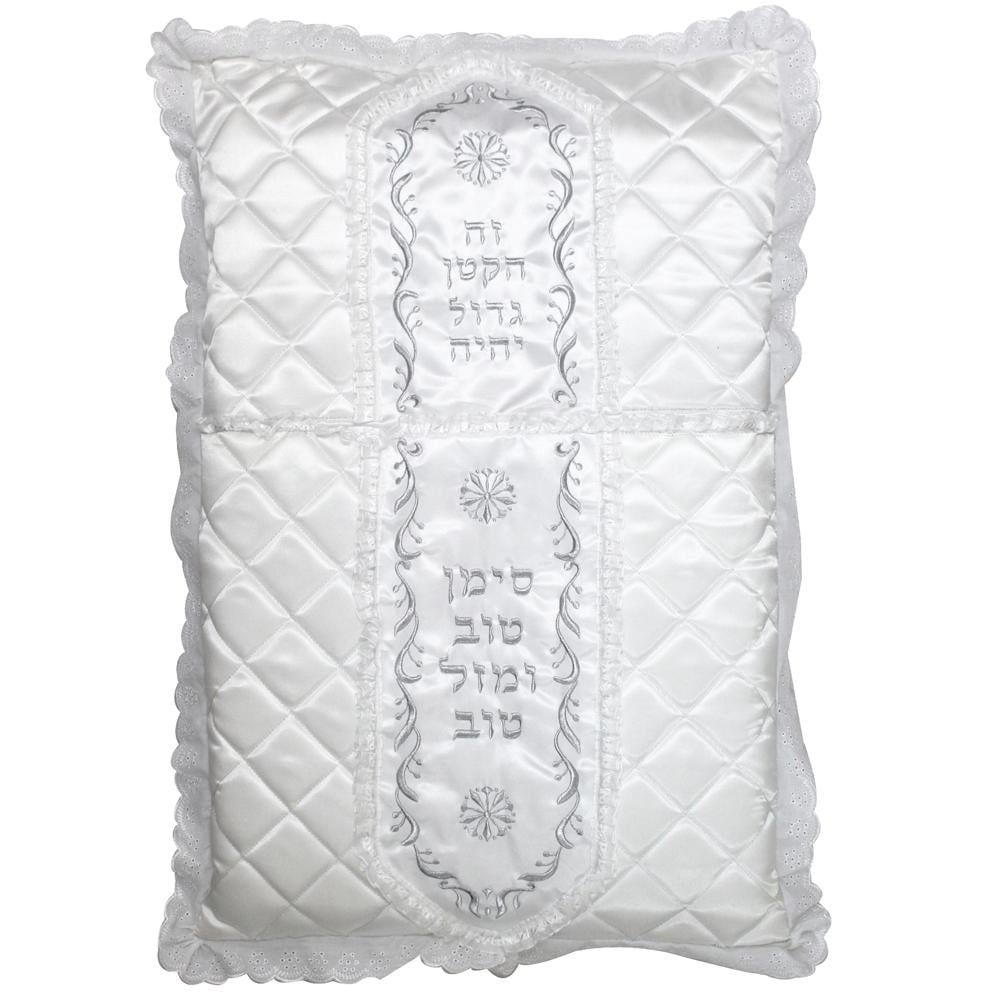
Milah, or circumcision, sits at a crossroads between belonging and bodily autonomy—a tension that has long shaped Jewish life. Examining it through a queer lens raises questions not only about ethics and consent, but about the ways in which identity, faith, and community intersect.
Questioning as a Jewish Act
Judaism has never been a tradition without questions. On the contrary, it is a tradition built on them. From the pages of the Talmud—which is nothing less than a multivocal record of disagreement, debate, and ethical tension—to contemporary Jewish thought, asking difficult questions has always been a profoundly Jewish act.
We are fully aware that Judaism, like many ancient traditions, raises complex and sometimes troubling questions when examined through contemporary lenses: questions about patriarchy, gender roles, power, authority, and the body. These questions are neither new nor external to Judaism itself. They have existed for centuries, voiced in different forms by rabbis, scholars, mystics, and communities across time.
At the same time, Jewishness today is not only a religion. It is also belonging to a people and a culture—a shared history marked by continuity, trauma, survival, and collective memory. Jewish identity is lived not only through religious practice, but through cultural and communal bonds that transcend purely theological definitions. To question a practice, therefore, is not to deny belonging, nor to attempt to undo millennia of Jewish tradition, or to delegitimize religious practice. Rather, it aims to reflect, to ask, and to hold tension. We do not search for a single definitive answer, but for a space where ethical reflection, lived experience, and tradition can encounter one another honestly, especially for those whose lived experiences place them at the margins of traditional narratives.
It is from this place that we approach the ritual of milah, reflecting on it through a queer lens. Not to condemn, but to understand, to question, and to open dialogue.
Between Tradition and Consent
The practice of milah, traditionally performed on the eighth day after birth, holds profound significance within Jewish life. Rooted in millennia of tradition, it is far more than a ritual: it is a tangible symbol of covenant, belonging, and continuity. For many Jewish families, welcoming a child into the covenant through milah is an act of faith, identity, and communal connection. Across continents and generations, this ritual has shaped Jewish existence, binding communities through shared practice and spiritual meaning.
Yet when viewed through a queer lens, milah also raises important ethical questions, particularly around bodily autonomy, integrity, and consent. Unlike adults who may consciously choose rituals of meaning for themselves, infants cannot consent to procedures that permanently alter their bodies. Queer discourse has long emphasized bodily autonomy as central to resisting normative and imposed identities. This raises a difficult but necessary question: can a ritual imposed at birth be reconciled with values that prioritize agency over one’s own body?
This tension is not merely theoretical; it is deeply personal and communal. For many queer Jews, navigating the intersection of identity, desire, and tradition is complex and sometimes painful. Jewish life may be cherished and deeply meaningful, yet certain practices can feel alienating or intrusive when examined through the lens of consent. The community’s profound attachment to milah can stand in uneasy contrast to queer advocacy for self-determination and bodily choice.
Milah Across Time: Care, Covenant, and the Marked Body
Beyond its symbolic and covenantal meaning, milah has also historically been associated with concerns for hygiene, physical well-being, and communal care for the body; particularly in contexts where medical knowledge and sanitary conditions were limited. For generations, the practice was understood not only as a spiritual inscription of belonging, but also as a measure connected to health, cleanliness, and responsibility toward the most vulnerable. This historical dimension reminds us that milah was never conceived as an act meant to harm, control, or punish the body. While contemporary medicine invites more nuanced and plural understandings of bodily care, acknowledging this history does not negate ethical questions around consent or autonomy; rather, it situates the ritual within a broader symbolic, cultural, and relational framework that cannot be reduced to a single ethical or political lens.
Milah can also be understood as a marking of the body with group identity. For many, this mark represents belonging, continuity, and spiritual inheritance. At the same time, it invites reflection on the individual’s right to make irreversible decisions about their own body. Through a queer lens, a provocative question emerges: do we become Jewish first, or LGBTQAI+ first?
For infants, the answer is neither—both identities are assigned before conscious choice is possible. If we challenge the imposition of gender identity based on sex assigned at birth, should we not also question the assignment of religious and communal belonging through irreversible bodily practices?
One response that often arises in this discussion is that parents, by choosing to bring a child into the world, are therefore entitled to make decisions about that child’s body. Within this logic, parental authority is framed as a natural extension of creation itself: because parents give life, they may also shape it, including through irreversible bodily decisions made in the child’s presumed best interest or in the name of cultural continuity. Yet this argument warrants careful scrutiny. Does the fact of having chosen to give birth confer unlimited moral authority over another person’s body? Or does it instead generate a responsibility to safeguard the child’s future capacity for self-determination? If parental choice is taken as sufficient justification, the risk emerges that the child’s body becomes a site where adult beliefs, identities, and anxieties are inscribed without the possibility of refusal. This raises a deeper ethical tension: whether being brought into existence implies a debt of obedience, or whether it calls for heightened restraint precisely because the individual did not choose to be born.
Between Tradition and Consent
For many, having been circumcised has brought a subtle but persistent discomfort. It situates the body in a space of scrutiny, particularly during intimacy and medical encounters. It is not just a question of sexualization; it is the experience of being observed, examined, and legible in ways others rarely are. This should remind us that the ethical conversation around ritual is not hypothetical—it is lived, intimate, and relational.
These reflections highlight the difficulty of reconciling collective expectations with the queer principle of individual autonomy. What does it mean to belong to a community when participation begins with practices we did not choose? How can tradition be honored while also acknowledging the vulnerability of those who cannot consent?
By holding these tensions openly, we hope to foster conversations that are thoughtful, inclusive, and grounded in empathy. Examining milah from multiple perspectives allows queer Jews, families, and communities to engage with their histories and identities honestly, without erasing the meaning and value the ritual holds for many.
It is precisely at this crossroads, between tradition and consent, faith and autonomy, that dialogue becomes not only necessary, but transformative.

Let’s keep in touch.
Discover more about high-performance web design. Follow us on Twitter and Instagram.

