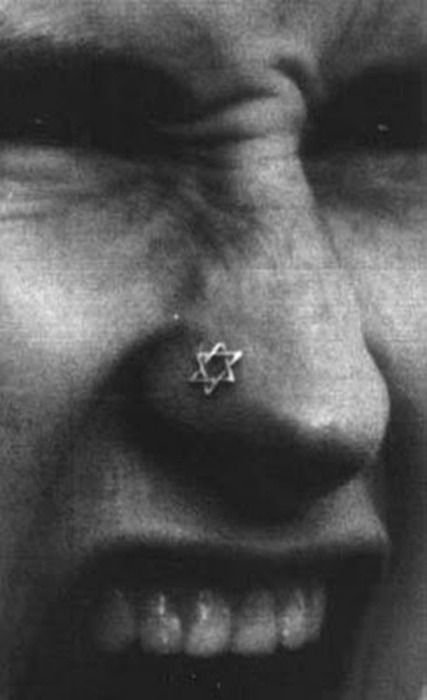
History does not belong only to the unbroken. Again and again, Jewish tradition reveals a deeper truth: transformation is born at the margins. From Abraham’s sterility to Moses’ stutter, our foundational figures teach us that difference is not a flaw in destiny — it is its very foundation. For LGBTQIA+ Jews, this is not only theology. It is lived experience.
History is often told as the triumph of the strong, the seamless, the unbroken. Yet when we look more closely, especially through the lens of Jewish tradition, we find a radically different truth: transformation is born not at the center, but at the margins. Dissidence, alterity, and difference are not obstacles to leadership or holiness; they are often their very source. Alterity, the condition of being other, of standing outside the norm, forces a different way of seeing. It sharpens perception, deepens reflection, and cultivates tools that those comfortably aligned with the center rarely need to develop. The margins are not empty spaces; they are sites of creativity, resilience, and moral clarity.
Fractured Figures of the Hebrew Bible
The Hebrew Bible is filled with figures who embody this truth. Our prophets and patriarchs were not idealized heroes sculpted from perfection. They were fractured, limited, and visibly marked by difficulty. And crucially, they became who they were through those difficulties, not despite them.
Abraham, the archetypal father of nations, begins his journey as a man without descendants. For much of his life, he is sterile, cut off from the most basic marker of continuity in the ancient world. Yet it is precisely this lack that reshapes the meaning of fatherhood. Abraham becomes not merely a biological progenitor, but a spiritual one: the father of a people bound by covenant, ethics, and choice. His sterility opens a space for redefining legacy itself.
Vision, Wounding, and Voice
Isaac, whose name is associated with laughter and vision, spends part of his life blind. And yet he is described by tradition as a visionary, someone whose sight is directed inward and forward rather than outward. His blindness reframes perception, suggesting that clarity does not always come through the eyes. Sometimes, seeing less of the surface allows one to perceive deeper truths.
Jacob, whose name is linked to rectitude and whose destiny is to become Israel, walks with a limp after wrestling with the divine. His physical imbalance becomes the lasting sign of his encounter with transcendence. He does not emerge whole in the conventional sense; he emerges transformed. His limp is not erased, it is carried forward as testimony that integrity can coexist with vulnerability, that blessing can wound, and that leadership does not require unscarred bodies.
And Moses, Moshe Rabbeinu, the ultimate prophet, the mouthpiece of G-d, the liberator of slaves, stutters. He protests his own appointment, insisting that he is “not a man of words.” Yet it is precisely this fractured speech that makes space for divine speech to pass through him. Moses does not dominate language; he is inhabited by it. His stutter dismantles the illusion that authority must be fluent, polished, or rhetorically flawless.
Difference as Destiny
These figures teach us something profound: difference is not a detour from destiny. It is the terrain on which destiny is built. To live at the margins is to develop muscles others do not need. It is to learn adaptability, empathy, and moral courage early and often. It is to question what is presented as “natural” or “normal,” and in doing so, to expose the fragility of those categories. Alterity offers a double vision: one that sees the world as it is, and one that imagines how it could be otherwise.
LGBTQIA+ Jewish Intersectionality
For LGBTQIA+ Jews, this insight is not abstract: it is lived reality. We inhabit an intersection of identities that have historically been pushed to the edges, sometimes separately, sometimes simultaneously. Queerness places us outside heteronormative expectations; Jewishness places us outside dominant cultural and historical narratives. Together, they form a powerful vantage point.
This dual alterity is often experienced as burden, especially in a world where visibility can invite hostility and belonging is conditional. But it is also a source of strength. It equips us with a nuanced understanding of exclusion and solidarity, of tradition and rupture, of continuity and reinvention. We know, intimately, what it means to love a heritage that has not always known how to love us back, and to remain engaged anyway. That tension is not weakness; it is ethical depth.
From the Margins, New Futures
At this intersection lies an opportunity. By recognizing the strengths forged by our differences—our resilience, creativity, critical thinking, and capacity for care—we can transform marginality into agency. From there, we can combat discrimination not only by resisting it, but by offering alternative models of community: ones rooted in dignity, plurality, and justice.
The Jewish story has never been about seamless belonging. It is a story of exile and return, of arguing with G-d, of walking forward while carrying wounds. To be an LGBTQIA+ Jew is not to stand outside that story, but to embody it fully. The margins are not where meaning thins out. They are where it intensifies. And from them, new futures are born.

Let’s keep in touch.
Discover more about high-performance web design. Follow us on Twitter and Instagram.

